
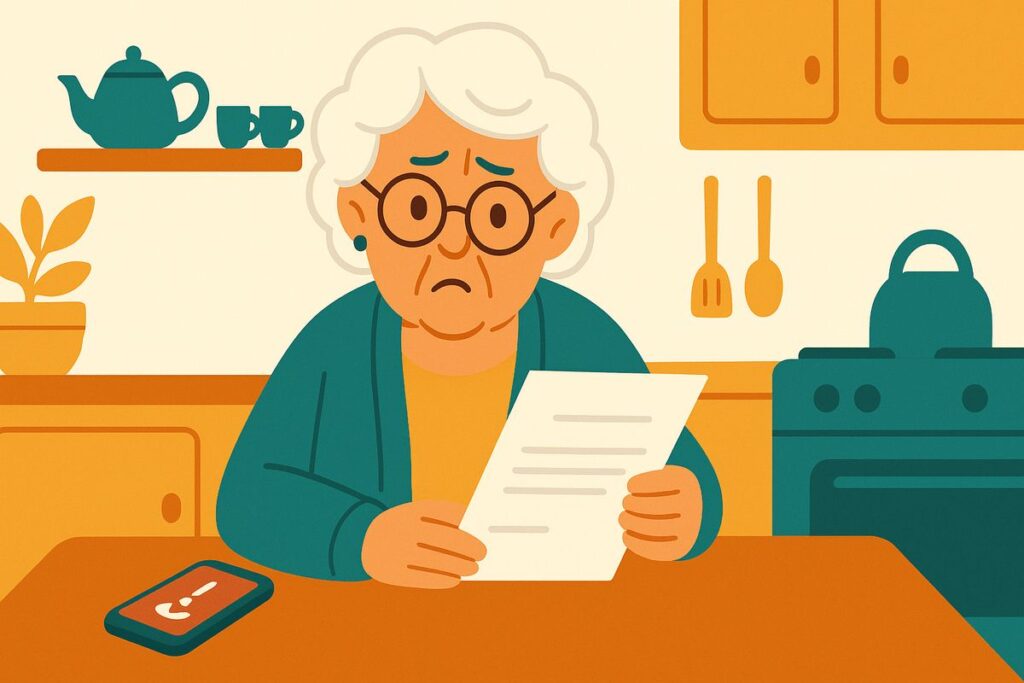
Mom called sounding delighted and doubtful at once. “Kim, I got a letter — and then a call — saying I won a $50,000 sweepstakes! But they say I have to pay $500 in taxes and fees first before they can release it. Isn’t that how it works?”
No, Mom — that’s the scam. If you have to pay to collect a prize, it isn’t a prize. Real winnings never require you to send money first.
This one hurts me a little, because it dresses up as good news. But the moment they ask you to pay, the good news is a trap.
You’re told you’ve won a lottery, sweepstakes, or a big prize — often one you don’t remember entering (Publishers Clearing House and “Mega Millions” are favorite names to borrow). To release the prize, they say, you must first pay taxes, “insurance,” or a processing fee — by gift card, wire, or Zelle, naturally. Pay once and there’s always another fee, and another, until the money runs out. The prize never comes, because it never existed.
The rule is simple and absolute: a real prize is free to collect. Legitimate sweepstakes take any taxes out of the winnings or have you handle them with the IRS directly — they never ask you to send money to receive money. Anyone who says “pay this fee first” is lying, no matter how official the letter looks or how kind the caller sounds.
Kim’s 3 Rules
1. If you have to pay to collect a prize, it isn’t a prize — it’s a scam.
2. You can’t win a lottery or sweepstakes you never entered. A “win” out of nowhere is bait.
3. Never send gift cards, wire, or Zelle to “release” winnings. Real prizes are free to collect.
If it already happened
If you sent money, call your bank or the gift-card company right away — speed gives you the best (if slim) chance. Report it at ReportFraud.ftc.gov, and to your state attorney general’s office. Keep the letter and any numbers. And please tell a family member — scammers keep “winner” lists and call the same kind hearts again and again.
Mom framed her “winnings” question as a joke by the end. “Fifty thousand dollars,” she chuckled, “for the low price of five hundred. Some bargain.” She threw the letter away.
Kim spent 30 years in computer security and now helps her 80-year-old mom — and you — stay safe online. Got a strange email, text, or call? Ask Kim first.



💡 Have a question for Kim? Use “Questions from readers” just above — Kim answers within the hour. Comments here are for sharing with other members (but Kim reads them too).
Loading comments…