

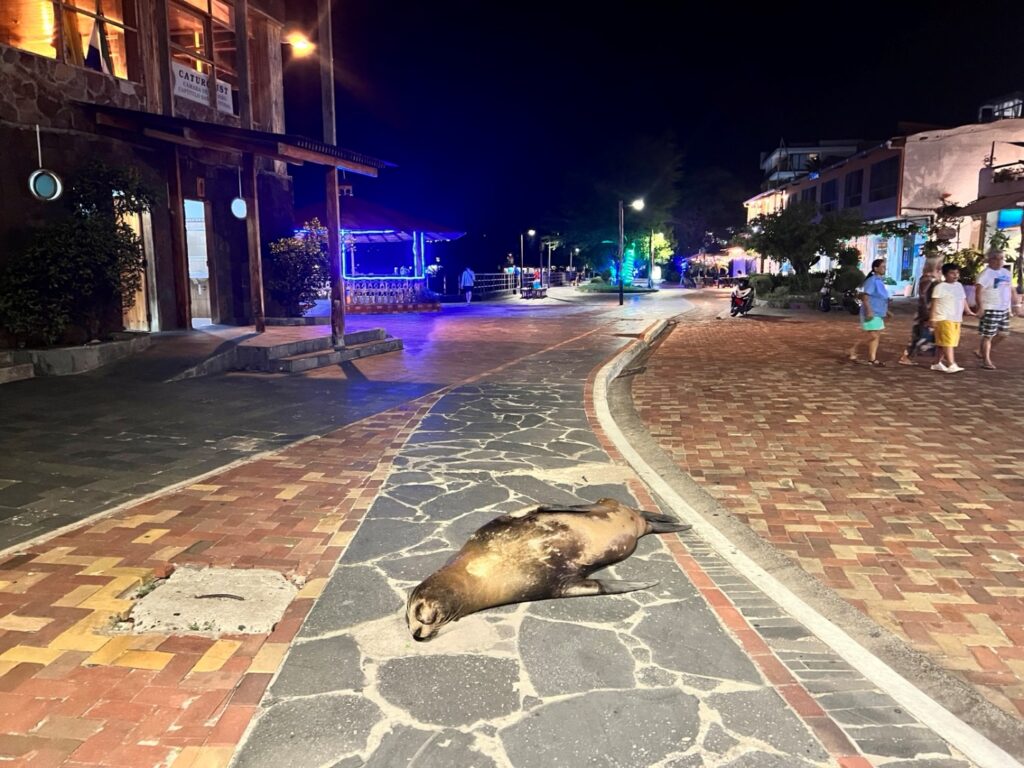
The Galápagos is a once-in-a-lifetime wildlife trip: sea lions on the beach, giant tortoises, and blue-footed boobies right at your feet. It is also remote, cash-based, and full of small boats, and the entry costs recently went up. A little planning keeps it magical instead of stressful, especially when you travel with older parents. Here is what to check first.
|
Goldie’s Quick Answer Bring a passport valid at least six months, complete Ecuador’s free online arrival form before you fly, and carry crisp US cash for the park fees. Fly from Quito or Guayaquil to the islands, hop between islands by small plane or a calm morning ferry, and match each day to your parents’ mobility. Then let the wildlife do the rest. |
What Most Families Miss
1. The fees went up, and they are cash. Ecuador’s Galápagos National Park entrance fee is now $200 per adult and $100 per child under 12, paid in cash when you land at Baltra or San Cristóbal. On top of that, every traveler needs a $20 Transit Control Card bought on the mainland before your flight, and Ecuador now asks visitors to complete a free online arrival form ahead of time. There are no ATMs at the Baltra airport, so bring clean, crisp US bills. For a family of six, that is well over $1,000 in cash before you leave the airport. See Ecuador’s official travel site.
2. Getting there and around is a lot of small boats, so go gentle for grandparents. The islands have no international flights; you fly from Quito or Guayaquil, about two to two and a half hours, then move between islands by speedboat ferry (two to two and a half hours, often bumpy) or small plane (around 40 minutes, pricier). For older travelers or anyone prone to seasickness, fly at least one leg, take motion-sickness medicine before boarding, and choose calmer morning ferries. If you overnight in Quito, remember it sits around 9,350 feet, so take the first day slow.
3. The Galápagos is active, not a resort. Many tours involve wet landings, stepping off a small boat into shallow water, plus walking on uneven, rocky, volcanic ground. Match each outing to your parents’ comfort: a calm bay tour or a shaded boat can be easier than a long hike. Bring sturdy, grippy shoes, and do not be shy about sitting a tour out to rest.
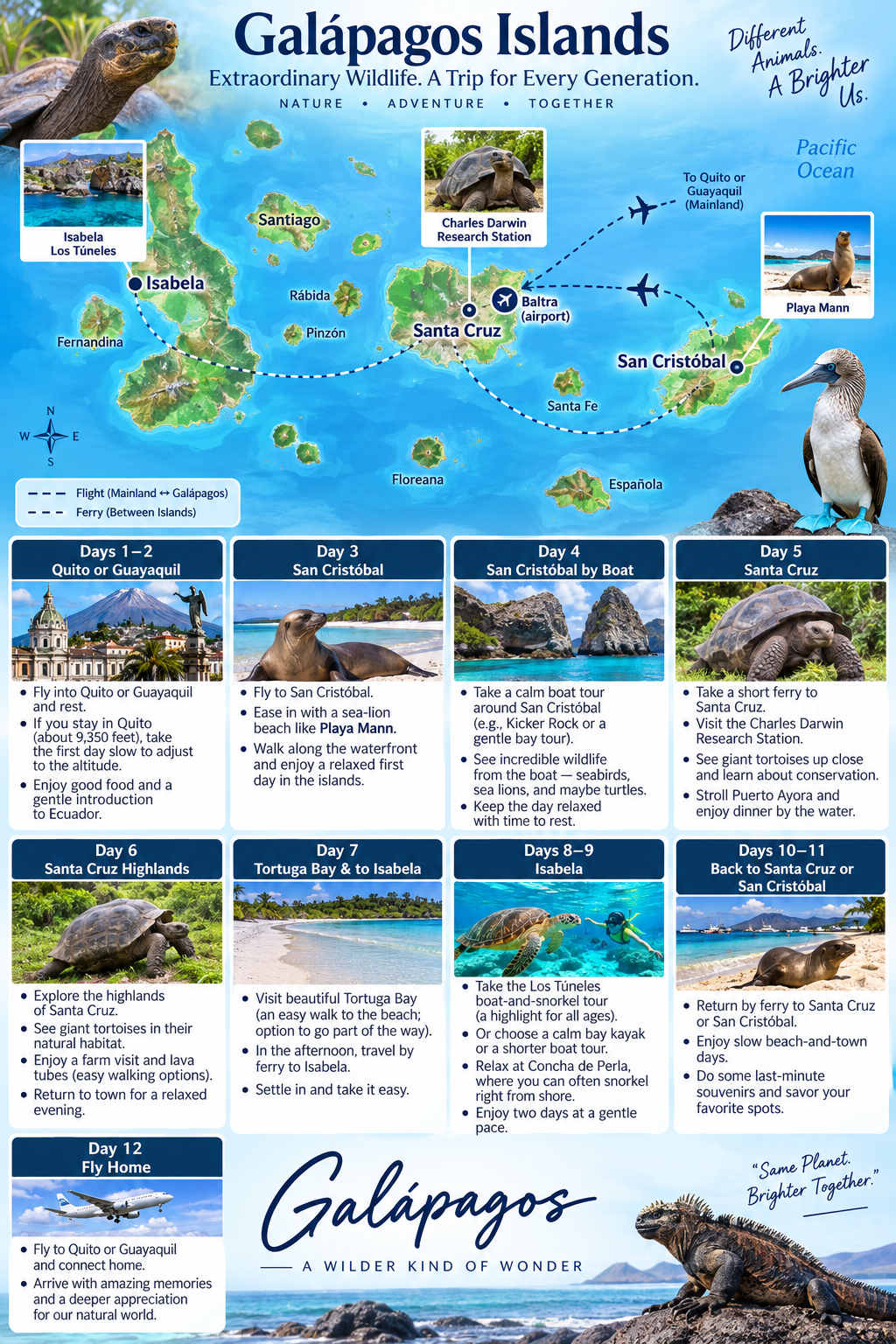
A Simple Plan for All Ages
Keep it to one main thing a day, with real rest between. A relaxed pace across about eleven nights:
- Days 1-2: Fly into Quito or Guayaquil and rest. If you stay in Quito (about 9,350 feet), take the first day slow to adjust to the altitude.
- Day 3: Fly to San Cristóbal. Ease in with a sea-lion beach like Playa Mann.
- Days 4-5: Explore San Cristóbal by boat with a calm bay tour, then hop to Santa Cruz for the Charles Darwin Research Station and giant tortoises.
- Days 6-7: On Santa Cruz, see the highlands and Tortuga Bay at an easy pace, then travel to Isabela.
- Days 8-9: On Isabela, take the gentle Los Túneles boat-and-snorkel tour or a calm bay kayak, and relax at Concha de Perla.
- Days 10-11: Head back toward Santa Cruz or San Cristóbal for slow beach-and-town days.
- Day 12: Fly to the mainland and connect home.
One real group of six (four adults and two children) did an eleven-night version of this for roughly $12,000 total, including international flights, hotels, ferries, park fees, tours, and food. Your costs will vary.
Goldie’s Table: What to Book and Bring
For small boats and uneven island paths, keep the day bag light and prioritize sun protection and dry belongings. Add the infant or toddler supplies only for families who need them.
|
What to book or bring |
Why it helps seniors and families |
Link |
|---|---|---|
|
Passport and Ecuador arrival form |
Passport valid 6+ months; complete the free online customs form before you fly |
|
|
Park fee and Transit Control Card |
$200 per adult, $100 per child, cash on arrival; plus a $20 card per person on the mainland |
|
|
Accessible, step-free hotels |
Easier rooms and elevators so grandparents can rest between island days |
American Express Learn more |
|
Small-plane island hop (Emetebe or ESAV) |
Skips the roughest speedboat crossings; gentler for seniors and kids |
|
|
Sun protection for exposed skin during outdoor outings. Reapply as labeled, especially after swimming or sweating; check local sunscreen requirements. |
||
|
Helps locate luggage, a stroller, or keys in Find My. Choose a secure holder and check iPhone compatibility. AirTag is for belongings, not monitoring people. |
||
|
May help with a baby on short, suitable land walks. Ask guides about footing and carrying limits; a carrier is not a boating flotation device. |
||
|
Vilebrequin UPF rashguards for adults and kids |
Cover shoulders and arms during beach and boat days. Check each style’s UPF rating, and use sunscreen on exposed skin. |
|
|
A sunscreen option for children 6 months and older. Check the exact formula and label, reapply as directed, and combine with shade and clothing. |
||
|
Folding toddler toilet seat |
Makes unfamiliar toilets easier for a toilet-training child. Check that it fits securely, stay close, and clean it before packing it away. |
|
|
Huggies diapers or Pull-Ups |
Pack the child’s usual size in the day bag, with extras for delays. Choose diapers or training pants to match the child’s stage. |
|
|
Huggies baby wipes |
Keep a small pack handy for diaper changes and messy hands during outings. Baby wipes do not disinfect surfaces. |
|
|
BAND-AID flexible bandages and rolled gauze |
Small additions to a travel first-aid kit for minor scrapes. Pack clean dressings and the family’s usual first-aid supplies. |
|
|
Travel mosquito net |
An optional backup for an adult bed in unscreened lodging. Confirm hanging space and keep loose netting away from babies and young children. |
|
|
Useful for buggy outdoor stops. Follow the exact product’s age and application directions, and keep repellent away from children’s hands, eyes, and mouths. |
||
|
Waterproof phone pouch |
Helps shield a phone from spray during small-boat transfers and wet landings. Check the product’s limits and test the empty pouch first. |
|
|
Maui Jim polarized sunglasses |
Reduce reflected glare during bright outdoor days, especially around water. Choose a frame that fits comfortably and stays secure. |
|
|
Apple EarPods with USB-C |
Wired audio for a compatible USB-C phone, with no headphone charging required. These do not plug directly into a standard airplane headphone socket. |
|
|
Carrier international phone daily or monthly plan |
Check Ecuador and island coverage with your carrier before departure. Download bookings and maps for offline use; remote tours may have little or no signal. |
Note: some travelers use a travel rewards card to offset flights or hotels. Approval and benefits are never guaranteed and can change, so check the issuer’s current terms. Add your affiliate links in the Check price and hotel rows.
Making It Easier on Grandparents
A few small things help. The equator sun is strong, so pack reef-safe sunscreen, hats, and water. If altitude bothers your parents, route through Guayaquil, which is at sea level, instead of Quito. Keep motion-sickness medicine handy for every boat, including day tours. Choose hotels with step-free rooms and elevators, and build in slow mornings. Above all, check that everyone’s passport is valid for at least six months before you book anything.
Bottom Line
The Galápagos gives your family something few places can: wild animals up close, on their own terms, with your parents and grandkids side by side. Plan the cash and paperwork, pick the gentler way between islands, and match each day to what everyone can enjoy. Memories are priceless, and traveling together only gets harder as our parents age and walking gets tougher. You worked hard for this. Go make the memories while everyone can enjoy them.
Disclaimer: GoldieCircle may recommend third-party products and services based on internal evaluation. Such recommendations do not constitute a warranty or guarantee of performance, suitability, or lifespan. All products and services are subject to their respective providers’ terms and conditions. GoldieCircle assumes no liability for any claims or damages arising from the use of any recommended product or service.
💡 Have a question for John? Use “Questions from readers” just above — John usually answers within the hour. Comments here are for sharing with other members (but John reads them too).
Loading comments…