
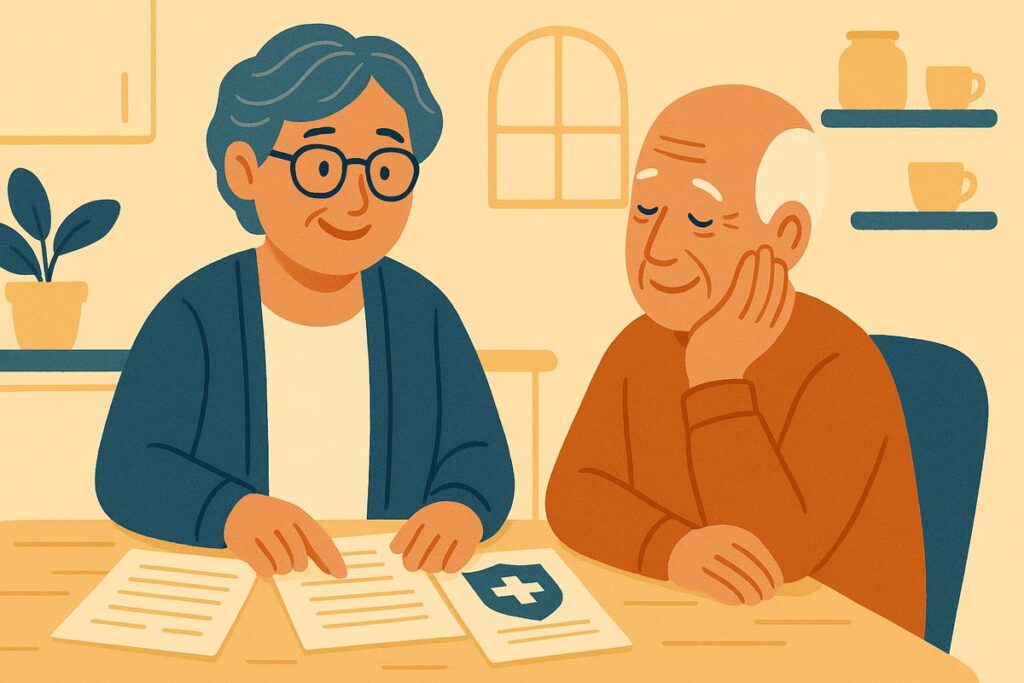
Some of the most relieved people I ever counseled were those who learned they could have both Medicare and Medicaid at the same time. It even has a name — being “dual-eligible” — and it’s genuinely the best of both worlds.
Here’s how the two work together. Medicare stays your main coverage — your hospital care (Part A), your doctors (Part B), and your prescriptions (Part D). Then Medicaid fills in the gaps: through the Medicare Savings Programs it pays your Medicare premiums and much of your out-of-pocket cost, and it covers important things Medicare doesn’t — most notably long-term care at home or in a nursing home. You’re not choosing one over the other; you keep Medicare and gain a second layer of help.
People who are dual-eligible also automatically get Extra Help for their prescriptions, which lowers drug costs to just a few dollars. And there are special Medicare Advantage plans — called Dual-Eligible Special Needs Plans (D-SNPs) — designed to coordinate all of it in one place, often with extra benefits like transportation to appointments.
The takeaway I want you to carry away: if your income is limited, don’t assume Medicare is all you can get. Being dual-eligible can turn frightening medical bills into small ones, and there is truly nothing to lose by finding out.
Ada’s Bottom Line
1. You can have Medicare AND Medicaid at once — that’s “dual-eligible,” and it’s the strongest coverage there is.
2. Medicare stays primary; Medicaid pays your Medicare costs and covers long-term care Medicare doesn’t.
3. Dual-eligible members automatically get Extra Help for drugs, and special D-SNP plans coordinate everything.
It comes down to your income and state — worth checking, because the payoff is large. To see what you personally qualify for — with your own numbers and state — use GoldieCircle’s free Benefits Checker (the “Find Benefits” option in Ask Goldie). For free, one-on-one help, your local SHIP counselor is wonderful (Source: Medicare.gov).
Ada spent more than 30 years as a SHIP benefits counselor helping seniors and families understand Medicare, Medicaid, and the programs that help pay for them. Confused by a letter, a form, or a bill? Ask Ada.


💡 Have a question for Ada? Use “Questions from readers” just above — Ada answers within the hour. Comments here are for sharing with other members (but Ada reads them too).
Loading comments…