
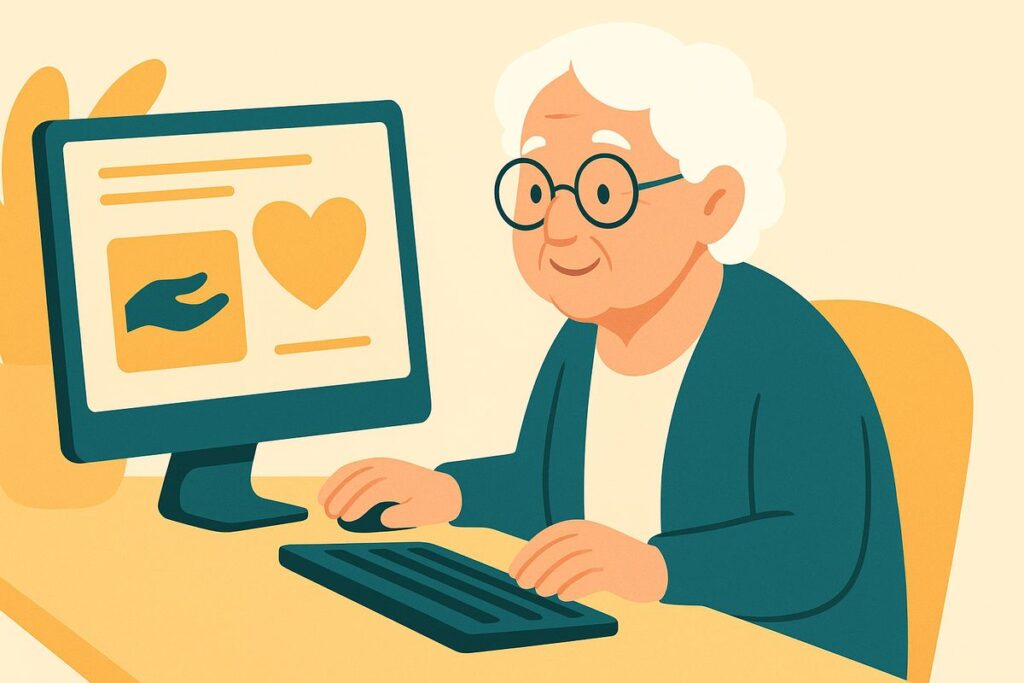
After the tornadoes came through Oklahoma this spring, Mom called me wanting to help. “Kim, someone called asking for a donation for the storm victims, and I got emails too. I want to give — but how do I know it’s real?”
Your heart’s in the right place, Mom — let’s just make sure the money reaches real victims and not a scammer. The safe move is simple: never give to whoever contacts you first. You choose the charity.
It’s a cruel truth that disasters bring out crooks as well as helpers. But a few calm habits keep your generosity safe.
Right after a disaster, fake charities bloom overnight with heart-tugging names that sound almost like the real ones. They call, email, and post online, pushing you to give immediately, often by gift card, wire, Zelle, or cryptocurrency — payments you can’t get back. Some pretend to be a local family in need. The urgency and the sad images are designed to get you to give before you check.
Here’s the safe way to be generous: decide who you want to help, then go to that charity yourself. Type the well-known organization’s address into your browser, or use a trusted checker like give.org (the BBB Wise Giving Alliance) or charitynavigator.org to confirm a group is real before you donate. Give by credit card, which you can dispute — never by gift card or wire. And you never owe anyone an instant decision; a real charity is just as grateful tomorrow.
Kim’s 3 Rules
1. Don’t donate to whoever contacts you first — you pick the charity and go to it yourself.
2. Check a charity at give.org or charitynavigator.org before giving, and give by credit card, never gift card or wire.
3. No real charity needs your donation in the next five minutes. Urgency is a red flag, not a reason.
If it already happened
If you gave by credit card to a group you now doubt, call your card company — you may be able to dispute it. If you sent a gift card or wire, report it fast at ReportFraud.ftc.gov; recovery is hard but reporting helps stop them. You can also check complaints through your state attorney general.
Mom gave to the Red Cross — through their real website, by credit card, on her own terms. “There,” she said. “Help that actually helps.” I was proud of her.
Kim spent 30 years in computer security and now helps her 80-year-old mom — and you — stay safe online. Got a strange email, text, or call? Ask Kim first.

💡 Have a question for Kim? Use “Questions from readers” just above — Kim answers within the hour. Comments here are for sharing with other members (but Kim reads them too).
Loading comments…