
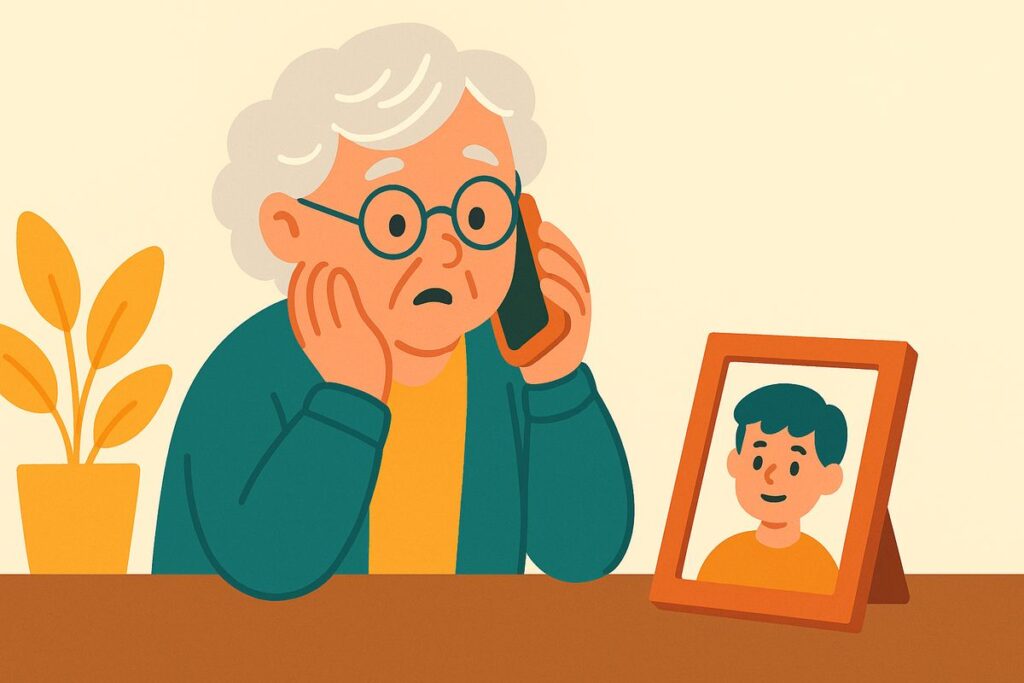
Mom called me quietly rattled. “Kim, I got a call and it sounded exactly like your nephew Danny. He was crying, said he’d been in a car accident and needed bail money right away, and not to tell his parents. It sounded just like him. What is happening?”
Mom, take a breath — that almost certainly wasn’t Danny. Scammers can now copy a voice from a few seconds of video online. The one thing that gives it away is what they always want: money, right now, in secret.
This is the newest and most unsettling twist on the oldest trick, and I want you ready for it, because it can fool anyone.
With today’s tools, a scammer needs only a short clip of someone’s voice — from a social media video, a voicemail, anywhere — to make a computer say anything in that voice. So the “grandchild in trouble” call now sounds heartbreakingly real: the right voice, crying, panicking, begging you not to tell their parents. Then comes the demand — bail, a lawyer, a hospital — needed immediately, by gift card, wire, or a courier who comes to your door for cash.
The voice can lie now, but the plan can’t hide. A real emergency survives a five-minute pause to check. Hang up and call your grandchild — or their parents — back on the number you already have. If they’re fine (they will be), you’ve caught it. It also helps to agree on a family “safe word” now: a simple word only your family knows, that a real caller can give and a scammer can’t.
Kim’s 3 Rules
1. A voice can be faked. Never send money based on a scary call — always hang up and verify.
2. Call your loved one back on the number you already have, not any number the caller gives you.
3. Set a family “safe word” today. A real family member knows it; a scammer never will.
If it already happened
If you sent money, call your bank or the gift-card company immediately — minutes matter. If a courier is coming to collect cash, do not hand anything over; call the police. Report it at ic3.gov and ReportFraud.ftc.gov. And be gentle with yourself — these calls are engineered to bypass your good sense by breaking your heart.
Mom hung up and called Danny’s cell. He answered on the second ring, at home, playing a video game, utterly fine. She and I agreed on a family safe word that afternoon. I won’t tell you what it is — that’s rather the point.
Kim spent 30 years in computer security and now helps her 80-year-old mom — and you — stay safe online. Got a strange email, text, or call? Ask Kim first.


💡 Have a question for Kim? Use “Questions from readers” just above — Kim answers within the hour. Comments here are for sharing with other members (but Kim reads them too).
Loading comments…