
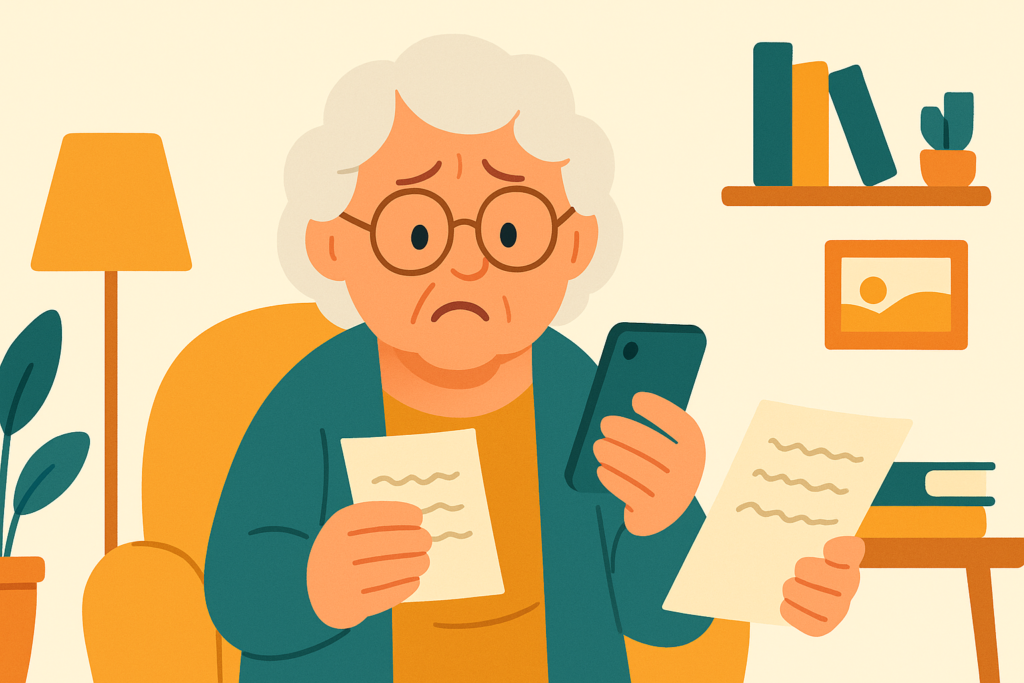
Mom called me sounding a little flattered and a little unsure all at once. “Kim, there’s a gentleman from the book club group online. He started sending me private messages a few weeks ago. He’s very kind — he lost his wife too, he says. A retired engineer, working on a project overseas. We’ve been writing every single day. But he asked me for something today, and it gave me pause.”
“Mom, I’m so glad you called me first. What did he ask for?”
“He said he can’t get into his bank while he’s abroad, and he needs to borrow $2,000 just until he flies home next month. He promised he’d pay it back the moment he lands. He was so sweet about it.”
“Mom, please don’t send anything. I don’t think this man is who he says he is.” I’ve spent 30 years in computer security, and since Dad passed, Mom’s the one I worry about most — living on her own in Oklahoma, with a big, kind heart. And a big, kind heart is exactly what this scam is built to break.
It’s called a sweetheart scam or romance scam, and it’s the most patient con there is. It isn’t a quick phone call — it’s weeks or months of daily messages, real conversation, real affection. The scammer builds a genuine bond. They often say “I love you” faster than feels normal. And they target widows and widowers on purpose, because they know the loneliness is real and the longing for companionship is real.
There’s always a reason they can’t meet or show their face. He’s working overseas. He’s on an oil rig. He’s a doctor with the military. He’s traveling for business. Whatever the story, it explains why there’s never a live video call and never a visit in person.
And then, once the bond is strong, the emergency arrives. A frozen bank account. A medical bill. A stuck shipment. A customs fee. A plane ticket home. It always has a reason and a deadline. And here’s the cruel part: if you send money once, there is always another emergency, until the money — or your trust — runs out.
The way through is simpler than it feels. A real person who cares about you can show you their face on a live video call. Ask for one. If there’s always an excuse, that excuse IS your answer. And never send money to someone you have not met in person, no matter how deep the feelings run. The feelings can be real. The person on the other end is not.
Kim’s 3 Rules
1. If you’ve never seen their face on a live video call, you don’t truly know who they are.
2. Anyone you met online who asks you for money — for any reason — is running a scam.
3. Real love is patient and never has a deadline. “I need it today” is a scammer’s line, not a sweetheart’s.
If it already happened
Please hear me: this happens to sharp, warm, wonderful people by the millions, and the grief and loneliness these criminals exploit are real. There is no shame in having a good heart. If you’ve sent money, stop all contact, call your bank right away, and report it at ReportFraud.ftc.gov and ic3.gov. And tell someone you trust — you’ll need a friend, not just a bank. The AARP Fraud Watch helpline (877-908-3360) has kind people who talk with folks through exactly this, every day.
Mom asked her gentleman for a video call. He had a dozen reasons why he couldn’t. So she stopped writing. “It stung a little,” she admitted to me. “But I’d rather feel a little foolish than lose two thousand dollars and my good sense.” I told her she wasn’t foolish at all — she was the smartest woman I know.
Kim spent 30 years in computer security and now helps her 80-year-old mom — and you — stay safe online. Got a strange email, text, or call? Ask Kim first.
💡 Have a question for Kim? Use “Questions from readers” just above — Kim answers within the hour. Comments here are for sharing with other members (but Kim reads them too).
Loading comments…