
REAL-WORLD WAKE-UP CALL: In the spring of 2024, 6-year-old Oscar Stuebe was playing baseball in Lake Worth, Florida, when an ordinary pop fly — the kind families watch a hundred times a season — struck his chest. His heart stopped on the field. The cause was commotio cordis, the same rare condition behind NFL player Damar Hamlin’s 2023 cardiac arrest. Oscar’s mother began CPR within moments and saved his life, as reported by TODAY.
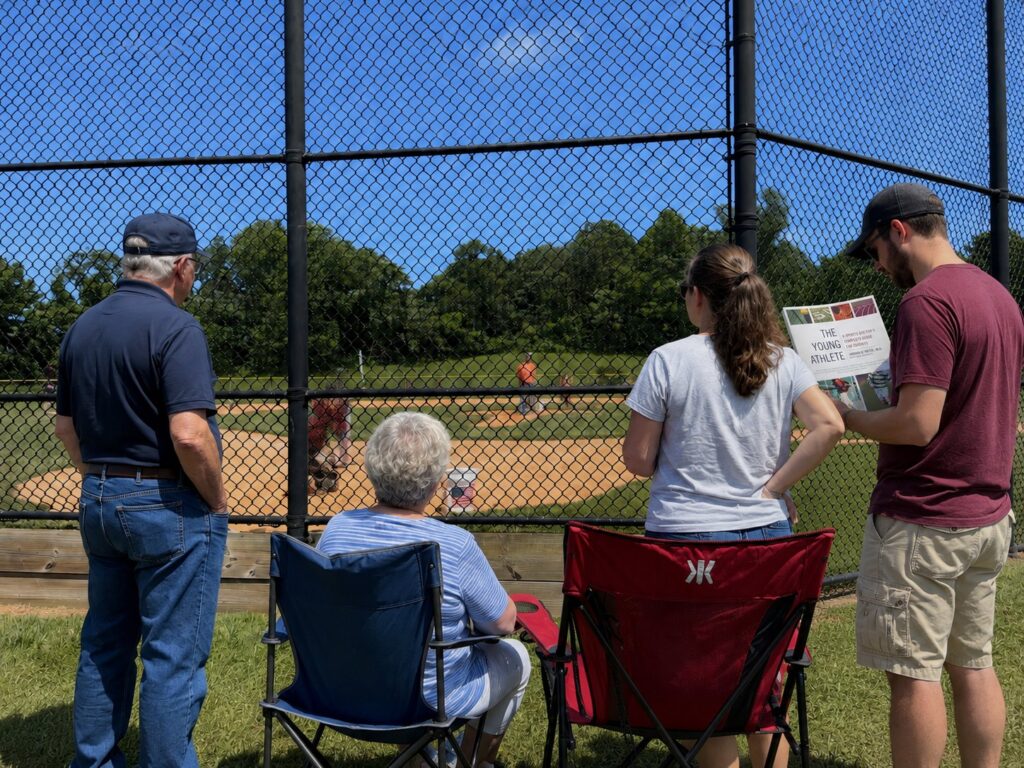
There is a picture almost every family knows by heart. Grandma and Grandpa settled into folding chairs behind the backstop. Mom at the fence, calling encouragement. And out on the diamond, a grandchild who would rather play baseball than do almost anything else on Earth.
In our family’s version of that picture, there is one more detail: Dad standing just behind the chairs, reading a sports medicine book between innings.
He is not being antisocial. He is being deliberate. The biggest threat to a child’s love of the game is usually not a dramatic collision — it is the slow, preventable injury that ends a season early, or sours a kid on sports for good.
Why This Matters to Grandparents, Too
For many older adults, watching a grandchild play ball is the best hour of the week. It is also real participation. Grandparents drive to practice, keep score, and pack the snacks — and they often notice what busy parents miss, like a grandson quietly rubbing his elbow after every throw. When the whole family learns a few basics, the child gains extra sets of caring eyes, and the grandparents gain many more seasons in the stands.
The Numbers Every Baseball Family Should Know
According to Johns Hopkins Medicine, more than 3.5 million children ages 14 and younger are treated for sports and recreation injuries in the U.S. each year. Three findings stand out for baseball families:
- About half of all youth sports injuries are overuse injuries — damage that builds up from repeated motions like throwing, rather than from one bad play.
- Most organized-sports injuries — about 62 percent — happen during practice, not games, so good habits matter every day.
- The American Academy of Pediatrics warns that early specialization — one sport, year-round, before puberty — raises the risk of overuse injury and burnout.
Here is the hopeful part: Johns Hopkins notes that about half of these injuries can be prevented with the right gear, sensible rules, rest breaks, and steady hydration. Prevention is a family project — and it works.
One Dad’s Game Plan: Read the Book Before the Season
When our family planned a Dodger Stadium visit for our son’s eighth birthday, the mission was simple: pour fuel on his love of the game.
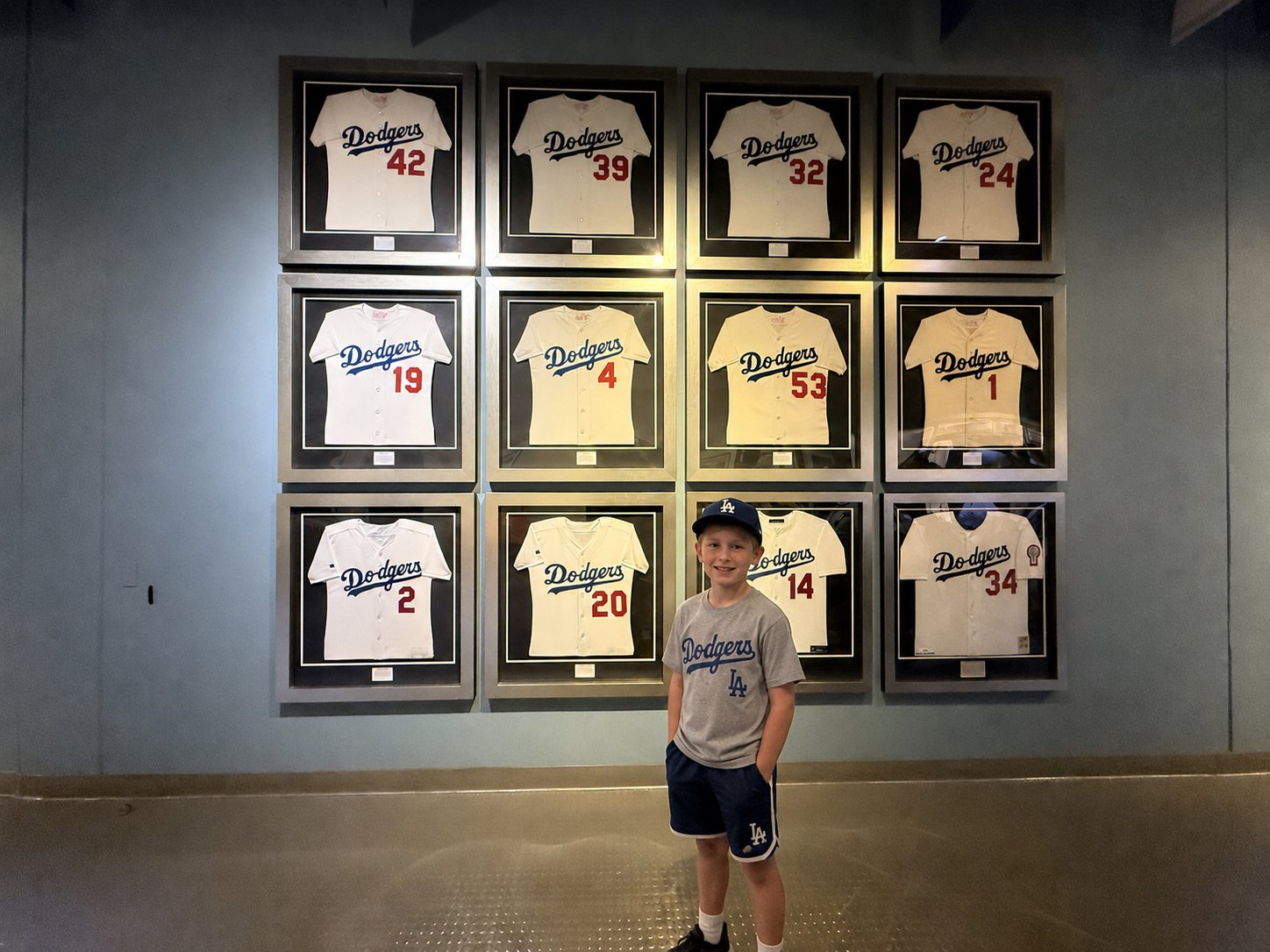
Inspiration day: face to face with the retired-number jerseys at Dodger Stadium.
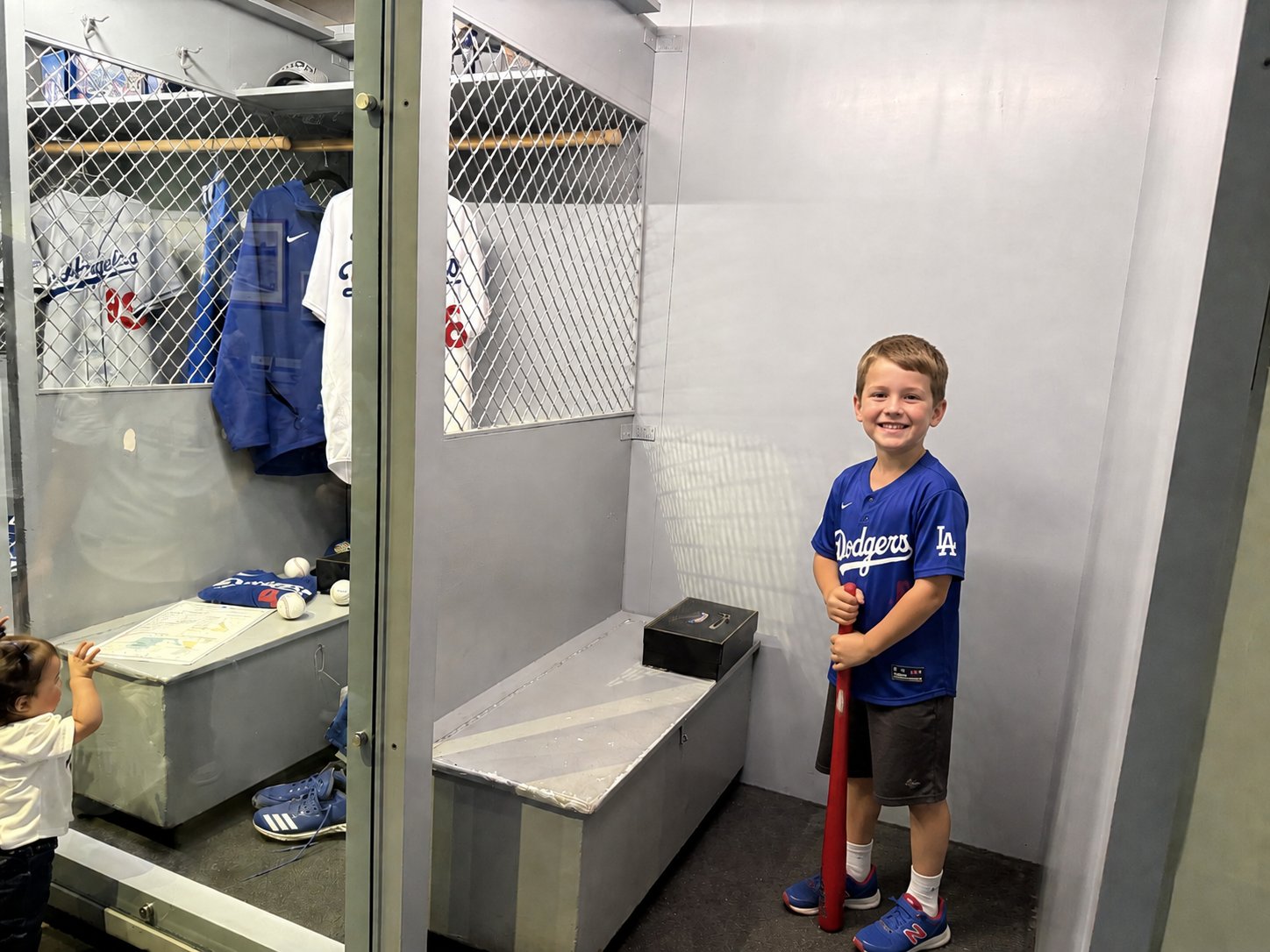
Trying out the locker room exhibit — and dreaming big.
It worked. But inspiration comes with responsibility, so Dad picked up The Young Athlete: A Sports Doctor’s Complete Guide for Parents by Jordan D. Metzl, MD, co-founder and medical director of the Sports Medicine Institute for Young Athletes at New York’s Hospital for Special Surgery. Written for parents of the roughly 30 million American kids in organized sports, the book explains in plain language:
- How families can help prevent common injuries — and recognize and evaluate the ones that happen anyway
- Sports nutrition and safe conditioning for growing bodies
- How to spot when a child is doing too much, and how to handle coaches, pressure, and burnout
It is general information, not a substitute for your child’s pediatrician. What it offers is a shared family playbook — and the confidence to ask better questions.
A Simple Game-Day Checklist for the Whole Family
- Warm up first. Easy throwing and stretching before full-speed play helps young arms.
- Respect pitch limits. MLB and USA Baseball publish free, age-based pitch counts and rest-day guidelines through their Pitch Smart program. Many leagues follow them — it never hurts to ask.
- Listen for “it only hurts a little.” Rubbing an elbow or shoulder, shaking the arm, or losing throwing accuracy can signal a developing overuse injury. Pain is a stop sign, not a toughness test.
- Pack water and shade — for two generations. Kids need fluids before, during, and after play, and older fans are vulnerable to heat, too. A shaded chair protects Grandma as surely as a helmet protects the batter.
- Know the emergency plan. Find the nearest AED before the first pitch, and consider learning hands-only CPR through the American Heart Association.
- Mind the bleachers. Metal stands are hot, backless, and slick. A padded stadium seat with back support — and a steady hand on the rail — keeps older fans safe and comfortable.
- Build in rest. Pediatricians encourage regular time off from any single sport during the year, especially for younger children.
Things to Consider
- This article shares general information and one family’s experience. It is not medical, safety, or coaching advice. Always talk with your child’s pediatrician or another qualified professional about your young athlete’s health.
- Every child grows differently. Pitch counts, training loads, and protective gear should fit the individual child and your league’s rules.
- No equipment can guarantee injury prevention — including chest-guard shirts — which is why emergency readiness matters most.
- Product features change; check current manufacturer specifications before buying.
Buy These Gifts For Loved Ones (Our Top Picks)
|
Product |
Why It Helps Your Family |
Link |
|---|---|---|
|
The Young Athlete: A Sports Doctor’s Complete Guide for Parents — Jordan D. Metzl, MD |
Plain-language guide from a Hospital for Special Surgery sports doctor: injury prevention, nutrition, burnout, and when to call the doctor. A thoughtful gift for any sports parent — or grandparent. |
|
|
McDavid Youth Chest Protector Shirt (HEX padding) |
Padded compression shirt designed to help absorb chest impacts from balls and hard hits. Breathable mesh for hot game days. Check sizing and your league’s equipment rules. |
|
|
PowerNet Flexi-Soft Safety Baseballs (12-Pack) |
Cushioned-core practice balls designed to reduce impact — great for backyard catch with Grandpa and for building a beginner’s confidence. |
|
|
Sport-Brella 3-Position Recliner Chair with Umbrella |
UPF 50+ swiveling umbrella, three recline positions, footrest, and insulated drink pocket — shade and comfort for grandparents through long doubleheaders. |
|
|
Sheenive Stadium Seat with Back Support |
Padded, folding bleacher seat with a real backrest and carry strap — far easier on older backs and hips than bare aluminum benches. |
Photos courtesy of the GoldieCircle Editorial Team with ChatGPT AI-generated.
Disclaimer: GoldieCircle may recommend third-party products and services based on internal evaluation. Such recommendations do not constitute a warranty or guarantee of performance, suitability, or lifespan. All products are subject to their respective manufacturers’ terms and conditions. GoldieCircle assumes no liability for any claims or damages arising from the use of any recommended product or service.

Loading comments…